Coaxial plug filter for cable television (CATV filter/trap) ESD-
-
Listing idspntmjgz
-
Categories
-
Asking price
Asking $5.00 USD per item
-
Quantity
4 items (New)
-
TaxNot applicable
-
Shipping & Handling
Not applicable
-
Payment Terms
Payment in advance only
Seller accepts Cash
-
Posted1 hour ago
abrakadabra
Brooklyn, NY
Member since July 29, 2025
(718) 714-0880
Please only contact the seller if you are interested in buying or bartering for this item. Spam and fraud will not be tolerated.
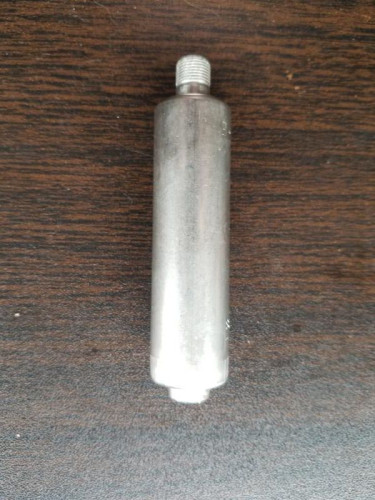
Coaxial plug filter for cable television (CATV filter/trap) with standard F type connectors (male/female) Eagle Comtronics Patented ESD-E
Such passive cylindrical filters are installed in the gap of the coaxial cable (usually in the distribution panel at the entrance to the apartment or at the output of the splitter) and perform several tasks:
• Blocking frequencies and channels. In analog and hybrid cable TV networks, providers used them to filter certain frequency bands in order to block access to paid channel packages or, conversely, cut off excess range.
• Noise reduction (high/low pass filter). They cut off return noise from subscriber equipment so that interference from the TV or old wiring does not fall back into the provider's backbone network.
• Signal isolation (eg MoCA filters). In modern networks, similar-shaped filters are placed at the entrance to the apartment so that the local network signal does not go through the coaxial cable to the neighbors.
The housing of such devices is usually marked with markings (alphanumeric model code or frequency range in MHz, for example, HPF, LPF, 5–42 MHz, etc.), by which its exact purpose can be determined.